
Celebrated American author Flannery O’Connor published two novels and dozens of short stories and novellas in her lifetime. Yet for whatever reason, John Huston’s Wise Blood from 1979 is the only movie adaptation of her work, namely her first novel. A couple years ago, Ethan Hawke semi-adapted some of her stories into the fabric of his biopic Wildcat, but there they are presented in a context apart from themselves. Wise Blood is the only case yet of her story unfiltered -written and produced by Benedict and Michael Fitzgerald, who knew O’Connor personally, as an apparently very faithful translation of her narrative style and voice. It is an intriguing movie -a good one- though I understand at its conclusion why there have not been others.
Wise Blood is a dim satire on both religiosity and atheism. It is about a young man called Hazel Motes, played by a still very baby-faced Brad Dourif, who has returned from war disillusioned by faith and inspired to channel that through his own form of anti-Christian preaching, endeavouring to induct followers into his Church Without Christ by adopting evangelical rhetorical tools and merely twisting them. In this capacity he comes into contact with several curious characters including a metaphorically blind acolyte, a literally blind rival street preacher and his love-smitten daughter.
Relatively early into this movie I had to remind myself that it was directed by Huston, the same man behind The Maltese Falcon, The Treasure of the Sierra Madre, The African Queen, and The Man Who Would Be King because it feels a world away from any of those movies and not just because they are separated by more than two or three decades. Wise Blood has the feel of a scrappy and relevant New Hollywood drama, like something from Robert Altman or Hal Ashby, rather than the guy who made film noirs and adventure epics in Old Hollywood. But it shows how adept Huston was at moving with the times. This was one of his last films but feels like an enterprising filmmaker's first.
 |
A part of that is likely down to how much he gives in to the source material though and its particular sardonic tone. O'Connor wrote in a vivid Southern Gothic style which Huston interprets here in a kind of searing tragicomedy. Hazel is no Elmer Gantry, a charlatan able to quickly amass a flock. On the contrary he is both achingly sincere in his atheistic creed and entirely unsuccessful in establishing converts, outside of the eccentric Enoch (Dan Shor). The story both mocks and pities him for this and you feel intently the point O'Connor and Huston are making -that Christianity is a fraud, yet an impassioned atheistic evangelism borne out of a desperation for fulfillment and meaning is no less so; in fact it is just as ludicrous an exercise. Hazel's need for existential reassurance amidst his crisis in faith is highly sympathetic, even as the way he goes about it is fraught by a hollow outlet and abrasive attitude -it's a hard thing to win converts in so condescending a manner, especially in the deep fundamentalist South.
And so his journey is one of a series of absurdist escapades as he grapples with his own outrageous anti-Christian actions whilst trying to preach his gospel. He is approached by a promoter (Ned Beatty) looking to turn him into a celebrity (amusingly almost Network-style), he enters into a romance semi-reluctantly with a Christian girl called Sabbath (Amy Wright), he runs over a doppelgänger, played by William Hickey, preaching in his style, subsequently sees his car pushed into a lake by a police officer, blinds himself to emanate Sabbath's father (a wonderful Harry Dean Stanton) -a fraudulent rival street preacher, and is confronted with an ultimatum marriage proposal from his landlady and caretaker (Mary Nell Santacroce).
In his first leading movie role, Dourif gives an apt performance here and you can see the root of many a later wilder role such as in The Exorcist III. But here there is still a layer of that sombre tragedy he played so effectively in One Flew Over the Cuckoo's Nest. In this film it is channeled into the delusions that power through his confusion and frustration. We don't actually learn much about him -what prompted this crisis and mission in him, where he comes from, or even what war he is returning from (to say nothing of any trauma experienced over there). No doubt he is thin compared to his book counterpart, but there is enough there to latch onto and be engrossed by.
Right up until the intentionally unsatisfying end that is, for lack of a better word, highly literary. It is a conclusion with no real resolution, that is kind of bitter and casts the whole premise as seemingly a pointless enterprise. A subplot involving Enoch and his attraction to a gorilla suit stops in its tracks midway through a narrative. Neither of these story choices translate especially well to film but there is a blunt effect to them that does stick and is perhaps a key to O'Connor's rather unsentimental style. You are left to ponder Hazel's choices, his philosophy outright, his futile efforts to evangelize, and if there really is some meaning at the end of it all that evaded this yearning dogmatic preacher.
Criterion Recommendation: Little Dorrit (1987)
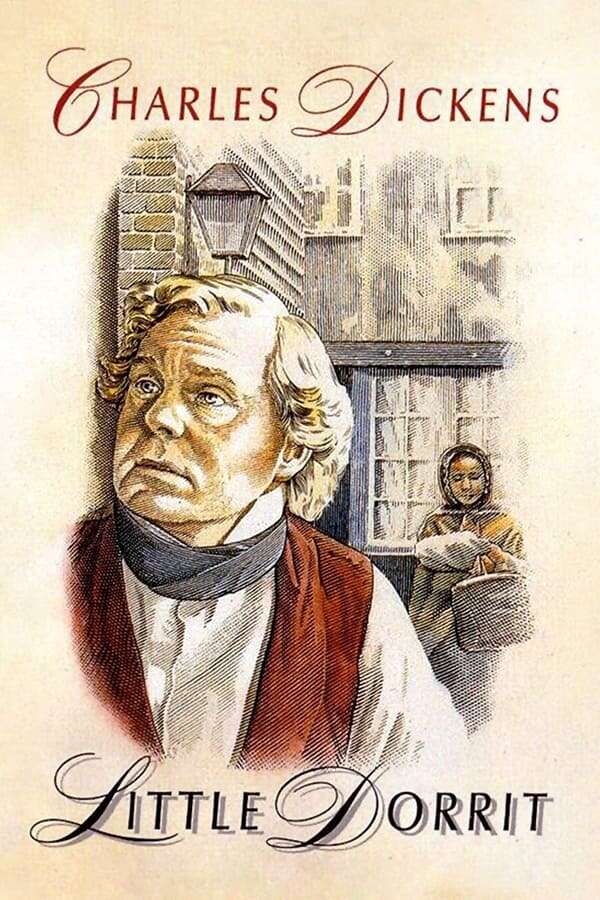 |
I recommend this film mostly because I want to see a copy of it in print in this part of the world. Christine Edzard's epic two-part adaptation of Little Dorrit is one of the unsung great Dickens movies and yet has only been released physically in the U.K. and even then not for nearly twenty years. Yet it deserves a full restoration by the folks at Criterion. Edzard, a British independent filmmaker who began her career as a costume designer, wrote and directed the very comprehensive film about a girl raised in debtor's prison and the efforts of a businessman to free her and her father. With a richer design and cinematography than typical British costume dramas in spite of its modest budget, it is the script and performances here that truly bring the story to life: Derek Jacobi's sincere Arthur Clenham, Alec Guinness's sorrowful William Dorrit, and as the titular Amy an astoundingly tender young Sarah Pickering, who came out of nowhere to play this part before enigmatically disappearing again. Though the story's satire is a touch diminished, Edzard perfectly encapsulates the bitter honesty of Dickens' narrative, makes an unconventional romance endearing, and paints her picture of Victorian England with subtlety and sombreness. A highly acclaimed, Oscar-nominated movie in its time that perfectly absorbs its audience, it does not deserve to be forgotten. Criterion could ensure its legacy.
Support me on Patreon: https://www.patreon.com/JordanBosch
Follow me on Bluesky: https://bsky.app/profile/jordanbosch.bsky.social
Letterboxd: https://letterboxd.com/jbosch
Twitter: https://twitter.com/Jordan_D_Bosch
Comments
Post a Comment