
Open your eyes people!
There is a version of Alejandro Amenábar's second feature that becomes the most obnoxious conspiracy tripe you'd ever see -if the title is anything to go by. In the way that The Matrix cultivated a following of nut-jobs misunderstanding the underlying thesis to its open radical concept. Open Your Eyes is a little like The Matrix, if it ended at the point that Neo took the red pill and did a whole lot more to mess with his sense of reality up to that point. And perhaps if it had gotten in bed with The Substance.
The movie might be better known as the original version of Vanilla Sky, Cameron Crowe and Tom Cruise's strange collaborative follow-up to Jerry Maguire, with Penélope Cruz actually reprising her role from this version, one of the movies that first broke her out as a star in Spain. She is Sofía, the beautiful, enigmatic love interest of César, played by Eduardo Noriega, a twenty-something Madridian who strongly values both his looks and his sexual prowess. As he begins a possible romance with Sofía however, his face is horribly disfigured in a car accident, and he experiences a series of bizarre episodes and apparent illusions as he desperately searches for any way towards surgical reconstruction and the continuation of his relationship.
It doesn't sound particularly speculative a premise, largely told in flashback by César to his prison psychiatrist as we work our way to finding out why he is in there. But the movie teases out its mysterious qualities, from the faint woman's voice telling him to open his eyes and an apparent dream of him wandering an empty city (perhaps a precursor to 28 Days Later) to the bizarre course of events shortly after his injury in which he is at first rebuffed and then reclaimed by Sofía and he begins treatment of a miracle restoration of his face -everything starts turning up for him and he's only too happy to accept it. Until the breaking down begins, either of his perception or reality itself.
 |
Amenábar suggests both at alternating points through the second half of the movie, as Sofía disappears to be replaced by the image of César's ex-lover Nuria (Najwa Nimri) -the woman who caused the debilitating crash and who claims to be that Sofía he has loved, backed up by everyone else in his life. Is it just his mind playing a trick on him, acting out a form of his fantasy? But then he encounters the shady company behind his treatment and it starts to look like his reality really is being manipulated and it comes back to them.
Through the disorientation, the power of César's motivation is strongly articulated. Noriega plays well this character's crisis of identity over the loss of his appearance as well as a very believable sense of despair -he took for granted exactly what was lost. And that desire for Sofía, with whom he bonds on a purely intellectual level on their first platonic night together, is meaningful as well. Cruz's transfixing aura is stunning, dreamlike in the subtleties of her interactions with César all through -she might be a fantasy from the start. Very clearly a movie star in the making as she grips the audience in intrigue as much as César.
And she is of course the crux of of his conundrum, as he longs for the reality with her a part of it, and is deeply confused and frustrated by her mere phantom presence in a world without. Amenábar is very good at dictating that tension visually, the spellbinding effect Sofía has and the fear it will be taken away. She seems to freeze at one point while they are having sex and he cuts to César stunned, as though terrified for a moment she will disappear before his eyes. In concert with this, he designs the world as more imposing as he goes along - César’s cell wherein he talks with Chete Lera’s sympathetic psychiatrist, a critical voice of reason for him by the end, is dim and claustrophobic. The company is clinical, bureaucratic, all-powerful as in one conference room scene. You could believe they are in control of him.
There is a very detailed explanation for what is happening to César, but I like that Amenábar suggests it could all be a bluff, largely through the skepticism of the psychiatrist. It is a very interesting concept revealed to César, but again we don’t get to see the other side of the looking glass. Were his experiences part of this conspiracy that began from a critical point after the crash, or is it just a mental break being exploited? We don’t get to see him open his eyes. A ballsy move that Amenábar, Noriega, and Cruz manage to pull of exceptionally. And given her impact on it, it’s no wonder the Americans deemed her irreplaceable.
Criterion Recommendation: The Conversation (1974)
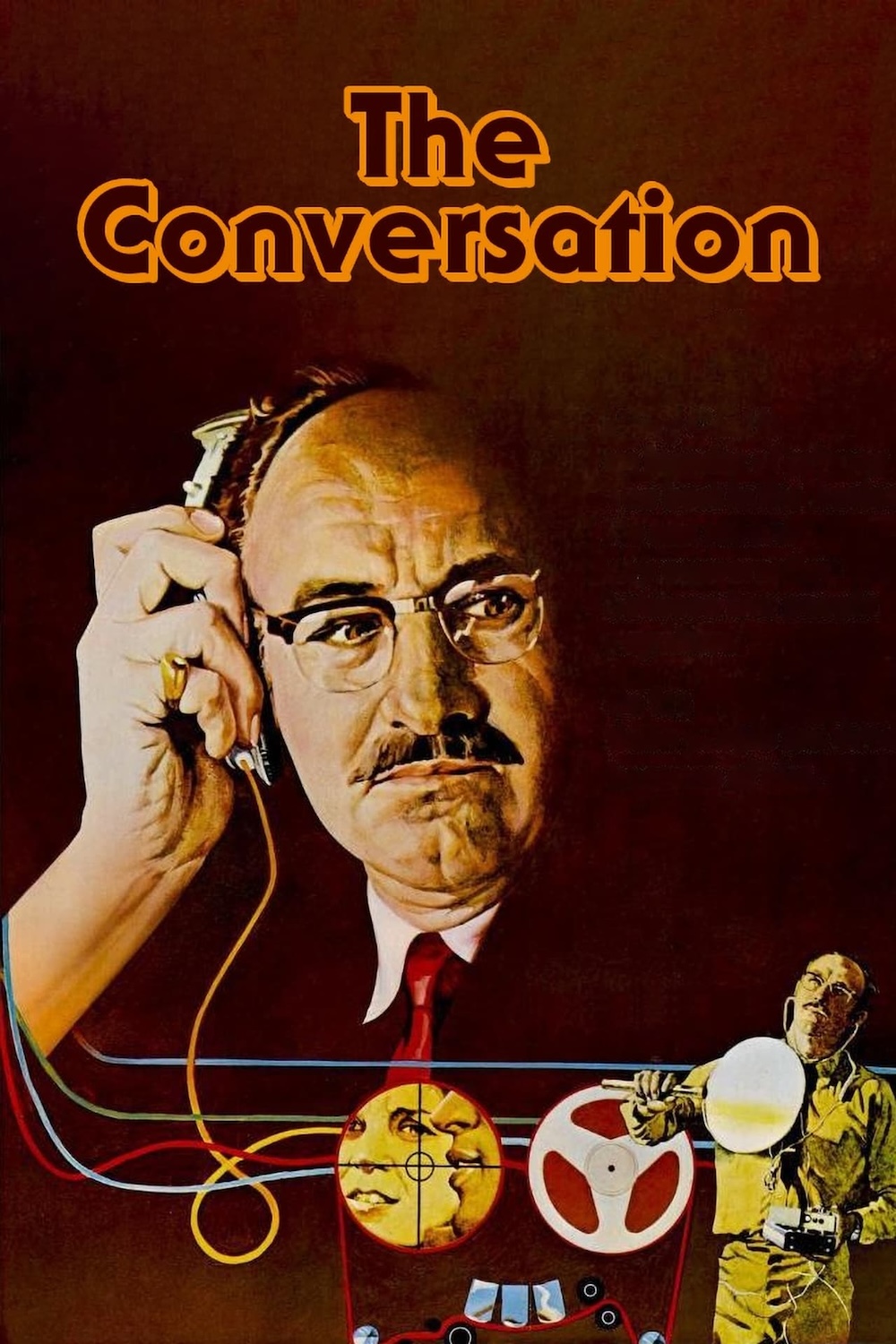 |
We lost Gene Hackman not too long ago, and like many movie fans I have thought about his legacy, what have been his most effective performances for me and how many I still have left to see. My favourite Hackman performance is in The Royal Tenenbaums but another that really redefined my image of him is from his peak in the 1970s. It must be only a matter of time before Francis Ford Coppola’s The Conversation enters the Criterion Collection -his Palme d’Or-winning movie about surveillance that was both timely (coming out in the midst of the Watergate Scandal) and prescient. Hackman’s Harry Caul is one of his most understated characters, though obsessive and paranoid, and he carries the terrific thriller about a murder plot potentially caught on tape and the ethics around his business in that context. Observation is all he knows, and it is a very unnerving situation as a result, especially in Coppola’s little touches in both what Caul picks up and what he witnesses. A window into the fears of its era, The Conversation may be one of Coppola’s most direct and potent social commentaries, the mad catharsis of its ending one we can still relate to today. For the watcher what is scarier than being watched?
Support me on Patreon: https://www.patreon.com/JordanBosch
Follow me on Bluesky: https://bsky.app/profile/jordanbosch.bsky.social
Letterboxd: https://letterboxd.com/jbosch
Twitter: https://twitter.com/Jordan_D_Bosch
Comments
Post a Comment