
Nobody puts any real effort into making action movies look cool anymore. They still can, but incidentally so. John Woo, whatever else you might say about him, certainly cared. Are half the things that the characters in this movie do while gunning each other down practical or even all that effective? No. But the imagery is really exciting to watch regardless.
Hard Boiled was Woo’s last film in Hong Kong before he formally made the transition to Hollywood and it is popularly regarded as one of his best movies (alongside his original The Killer a few years before). It is one of the defining films of the Hong Kong action genre and for good reason -its filmmaking and stunt choreography is highly inventive and extremely kinetic in a way that is palpably influential across the action film spectrum. It may be one of the earliest “gun-fu” movies and had a major role in solidifying the global star power of its two highly charismatic leads.
An adequate trade-off for what is not a particularly strong story. A counter-balance to previous movies where Woo was criticized for glorifying gangsters, this film is centred on cops -albeit cops who behave quite a bit like gangsters. Chow Yun-fat plays the obsessive inspector and off-hours jazz musician “Tequila” Yuen -an archetypal dirty cop constantly at odds with his superior officer and the ethics of his job. Following a violent confrontation with a triad syndicate that resulted in his partner’s death and his own accidental killing of an undercover officer, he sets out on a mission of vengeance while getting in the cross-hairs of one of the gang’s elite soldiers Alan (Tony Leung) -himself an undercover cop.
 |
The movie splits its time relatively easily between these two worlds, introducing Alan as a cold-blooded goon killing several people well before he is unmasked as one of “the good guys”. It is a blurred line, perhaps unconsciously so for Woo, between the two, with actors on either side capable of the same amount of reckless violence. Each organization claiming to exist above the rules of society, Tequila casually killing a man the force wants questioned just as an act of revenge. And Tequila is every bad cop stereotype beyond apparent vices for sex, booze, and cigarettes (though he rocks a toothpick very well). The film opens on a saxophone performance in a nightclub, a too rarely glimpsed side of the character that adds some nuance. Alan is little better served -his life outside the manufactured identity of his role entirely a mystery. But this isn’t a movie that cares at all about characters.
It doesn’t much need to when the charisma of Chow especially carries so much of the film. And there is that kind of mercurial solace under the surface that Woo captures, inevitable in any Chow character. It pales of course though to his slickness through the various fighting and shoot-out scenes, in which he moves and figures with miraculous precision. Intensity suits him, and Woo as well, who keeps the focus tight and organic through several long takes -especially in the climax- that bring home the immediacy and chaos. Leung, as the more methodical, subtly sensitive character, does well with these sequences too for somebody less experienced in that kind of filmmaking than Chow. And both are at their best in the latter part of the film where they are working together, the movie evolving into a buddy cop picture by necessity -if it is not particularly convincing. The confrontation on the dock and then everything through the hospital climax is pretty superb to watch, the pair having a ballet-like chemistry complimenting the momentum of Woo’s camera.
Woo apparently swore this movie would be less stylized than his others, and while it may be true in some respects -the action violence is pretty hard and gritty- he can’t help himself. There are some interesting compositing choices early on, where Tequila’s deduction methods are illustrated by Alan framed in the same light inserted into the middle of the pacing. Despite the movie’s harsher aspects, the scenes between the fights are often underscored by an evocative jazz soundtrack, tying the movie into the mood of detective fiction associated with its title. Woo’s operatic editing comes into play once in a while as do some unique transition devices, and the violence even has a flavour of aesthetic to it, such as in the blood outline around a book at the scene of an early crime -which feels implausible but is visually very striking.
That about sums up Woo’s reputation as a director, doesn’t it? It’s the kind of thing that would feel more intentional and conspicuous in his Hollywood career. Hard Boiled is a fun transition point for that, in some respects it was designed to be. The choreography and energy of its action sequences -its exceptional elaborate stunts- is a delight to watch if its story is rather thin and its themes undeveloped. If this is what propelled Leung’s career to its heights in the 90s and made Chow an international icon, it did its job very well. And few movies are its equal in terms of visual action exuberance for its own sake. Hard Boiled goes hard.
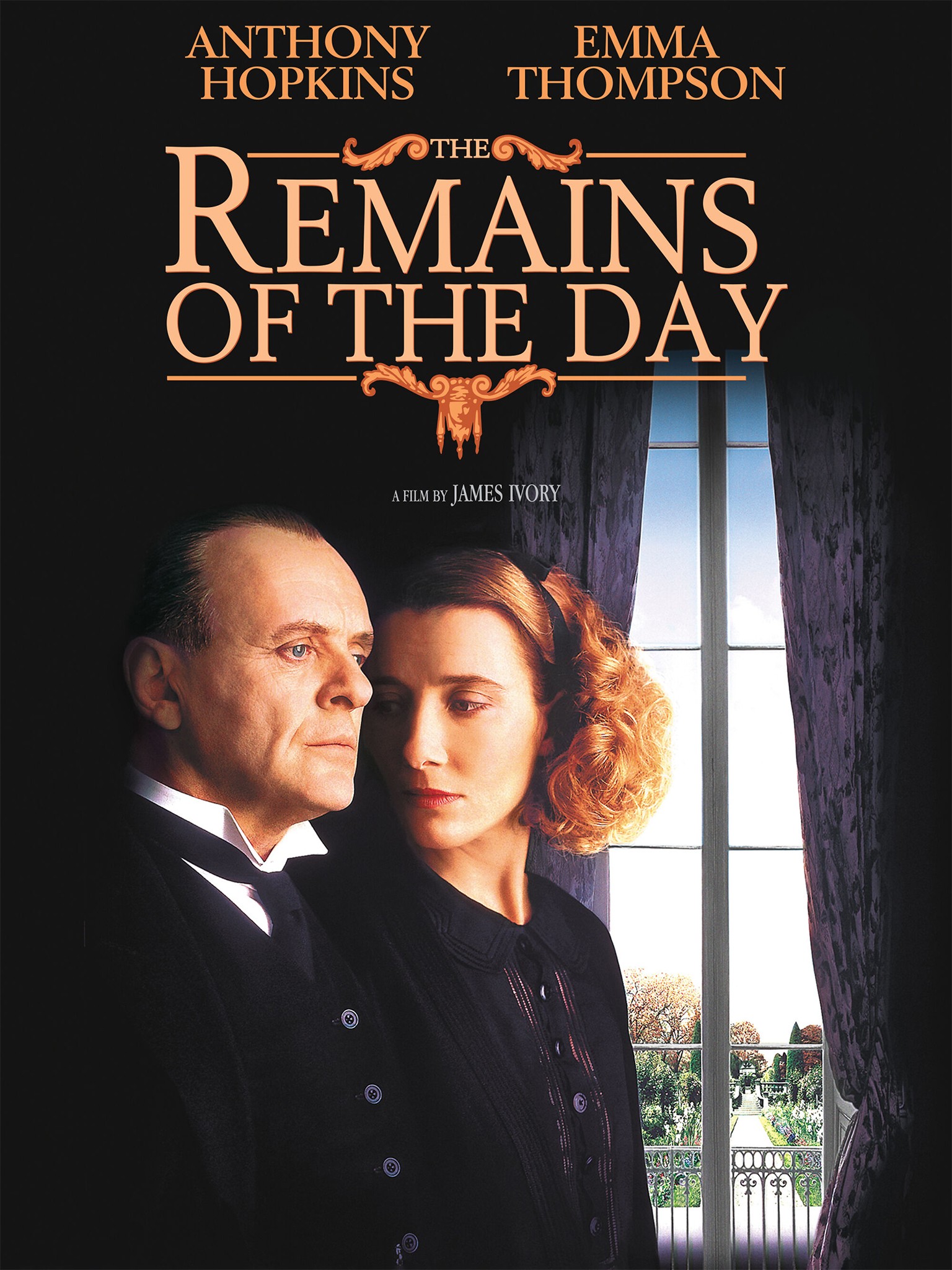
Criterion Recommendation: The Remains of the Day (1993)
 |
Support me on Patreon: https://www.patreon.com/JordanBosch
Follow me on Bluesky: https://bsky.app/profile/jordanbosch.bsky.social
Letterboxd: https://letterboxd.com/jbosch
Twitter: https://twitter.com/Jordan_D_Bosch
Comments
Post a Comment