
“I’m warning you, you’re about to see a real hot mess.”
Queens of Drama certainly has the right title. It is one of the most bombastically over-dramatic movies I have seen and its chief characters and their extremely turbulent relationship certainly appears to be the driver of most of it. It is also about pop stardom in a distinctly 2000s style with the glitz and the glamour and the broad-sweeping musical hits, which feels appropriate. And it is incredibly queer, in both its story and design, likewise hinted at. Even still, I didn’t quite expect what it was.
The movie is overbearing, intentionally so at times, and fairly chaotic in its satire that doesn’t gel with its earnest central precepts. But those are still engaging and powerful on their own, backed up by a hyper-saturated aesthetic that both captures the mood of its reference points and, under thoughtful direction from Alexis Langlois, looks wonderfully pretty. Some of the major disconnect comes in the framing device from a trans youtuber and intense fan called Steevy Shady (Bilal Hassani), guiding the audience through a star-crossed romance beginning in the late 90s between an aspiring pop idol Mimi Madamour (Louiza Aura) and punk girl Billie Kohler (Gio Ventura). We see the evolution of their passionate love life, the clashing of their different styles and artistry, but it is all very lovely and wholesome; until Mimi wins a talent show and gradually becomes a superstar, putting immense strain on the relationship over the years as it starts to crater.
The movie is a musical, not just in having fictitious pop and punk songs performed by its leads, but does feature a few of the typical numbers outside of that for the characters to express their feelings. And the songs are not bad -the principal piece that launches Mimi’s career “Don’t Touch” is catchy and feels of a type that could sit alongside the music of Britney Spears or Christina Aguilera -though of a French variety just a little bit removed. A song the pair of them create, “Fisted to the Heart”, probably would not.
 |
Unabashed with the queer material, both literal and metaphorical, Langlois fills their frame with flamboyant colours and expressions homaging the likes of John Waters and Gregg Araki. It abounds in identifiable aesthetics -from Steevy's Queer Eye personality to the butch and femme archetypes of Billie and Mimi respectively- as well as queer passions. There is explicit implication, most notably a scene where Mimi and Billie snog and dry hump each other in front of a couple associates -whose reaction is highly symbolic of heteronormative society- but for the most part their love is very sweet. Bathed in erotic lighting and colours, many of their scenes together are more sentimental than sensual, and Aura and Ventura play their emotions with conviction; heightened melodrama, but conviction nonetheless. And it really is the highlight of the film. The characters are somewhat flat and their romance itself perhaps a bit superficial, but it connects, and by the time Mimi is riding high while Billie starts to feel neglected, you are invested in their relationship.
The flavour brought on by the songs helps in this, as does the detail of Langlois' nostalgia. The pop music scene of that era in France wasn't quite the same as in the U.S., though there was bleedover -and especially when it came to the look and style of music videos, which is clearly a major inspiration here. Like many of those, the world of the movie is entirely artificial, constructed in sets or obvious digital spaces, with only insinuations to the wider world. Even the exteriors are on sound stages, but there is something very charming in that -it makes the world of Mimi and Billie more tangible, while their larger reality as an abstract fits better into the fairy tale design of their narrative, as Steevy casts it.
Steevy's intrusion into the story as an obsessive fan/stalker in the third act is maybe the central baffling choice that throws the story off the rails. It turns into Perfect Blue for a minute, then a nod to Carrie, before they are given a central role in the resolution. Steevy is to some level an insert of Langlois themselves and their own self-perception as a pop fan, but it interferes with the integrity of the main story. It comes in the aftermath of Mimi publicly outing herself and there is a decent commentary to be had there vis a vis the more aggressive fan behaviour, but it doesn't cohere.
Still, Queens of Drama is a nice fairy tale -a madcap, occasionally camp musical romance for the Chappell Roan crowd. A fun and weird bit of modern queer cinema it's good to see the Criterion Channel giving exposure to.
Criterion Recommendation: Ladyhawke (1985)
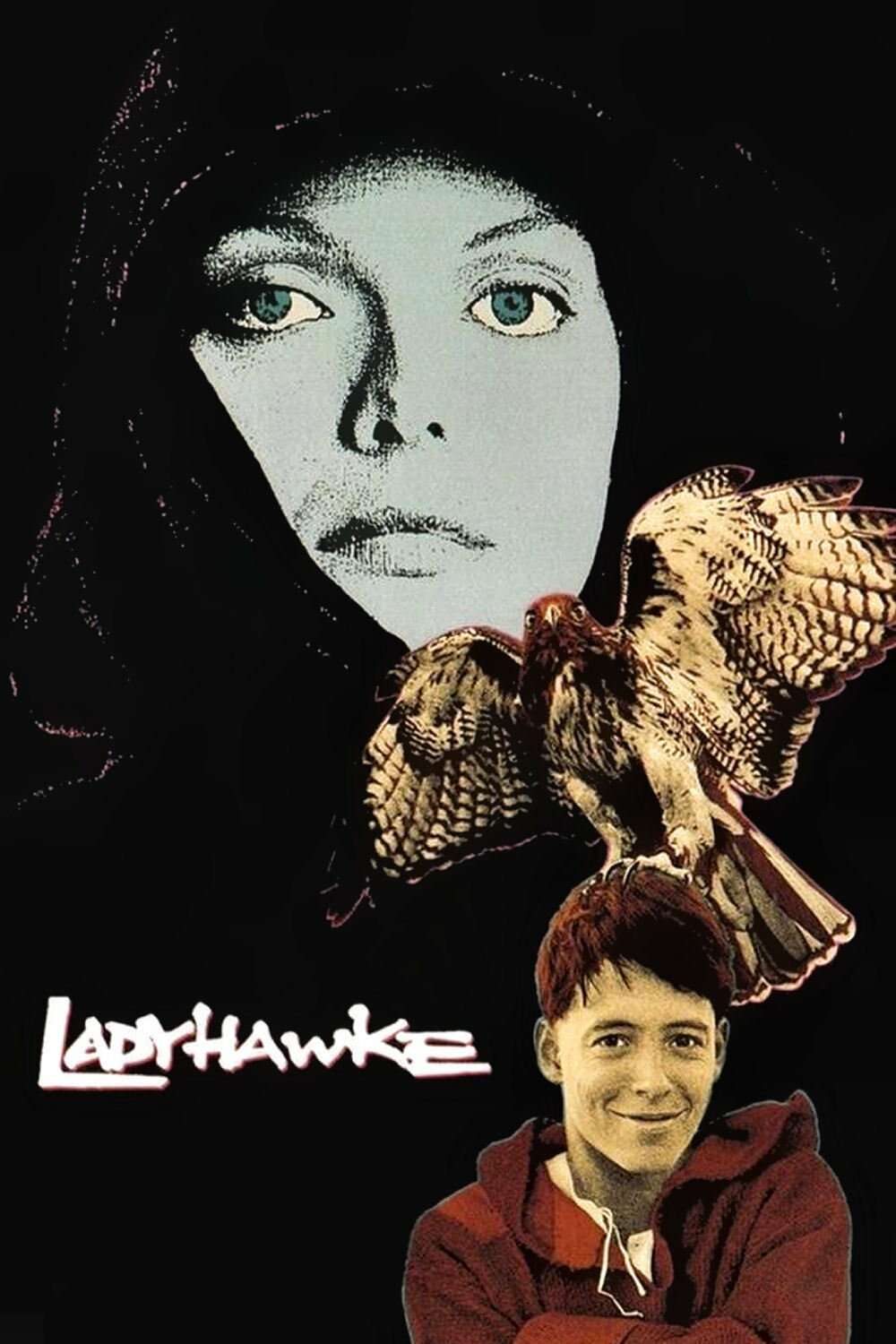 |
I discussed it a little last year in my essay on 80s fantasy films, but if any one of them deserved consideration for Criterion inclusion I think it would be Ladyhawke -the most surprising of them all. Directed by Richard Donner, it is a story about two lovers, a knight and his lady, cursed by a jealous bishop to be separated by form -during the day she exists in the body of a hawk while at night he is a lone wolf. With the aid of a young thief they set out to defeat the bishop and lift the curse. Set and predominantly shot in Italy, the movie makes ample, gorgeous use of its landscapes and distinct medieval architecture, giving it an otherworldly quality compared to other fantasy films. The high romance is classically medieval too, its brilliant concept so interesting, creative, and pure it might be found in the pages of Geoffrey Chaucer. And while the performance of a young Matthew Broderick might be lacking, both Michelle Pfeiffer and Rutger Hauer are terrific in their roles, somehow conveying a chemistry despite not sharing the screen until the end. Beautifully shot and stupendously told it is a gem of its time and its genre that deserves a little more love.
Support me on Patreon: https://www.patreon.com/JordanBosch
Follow me on Bluesky: https://bsky.app/profile/jordanbosch.bsky.social
Letterboxd: https://letterboxd.com/jbosch
Twitter: https://twitter.com/Jordan_D_Bosch
Comments
Post a Comment