“It was not Hitler or Himmler who deported me, beat me, and shot my family. It was the shoemaker, the milkman, the neighbour who were given a uniform and then believed they were the master race.” -Karl Stojka, Holocaust survivor
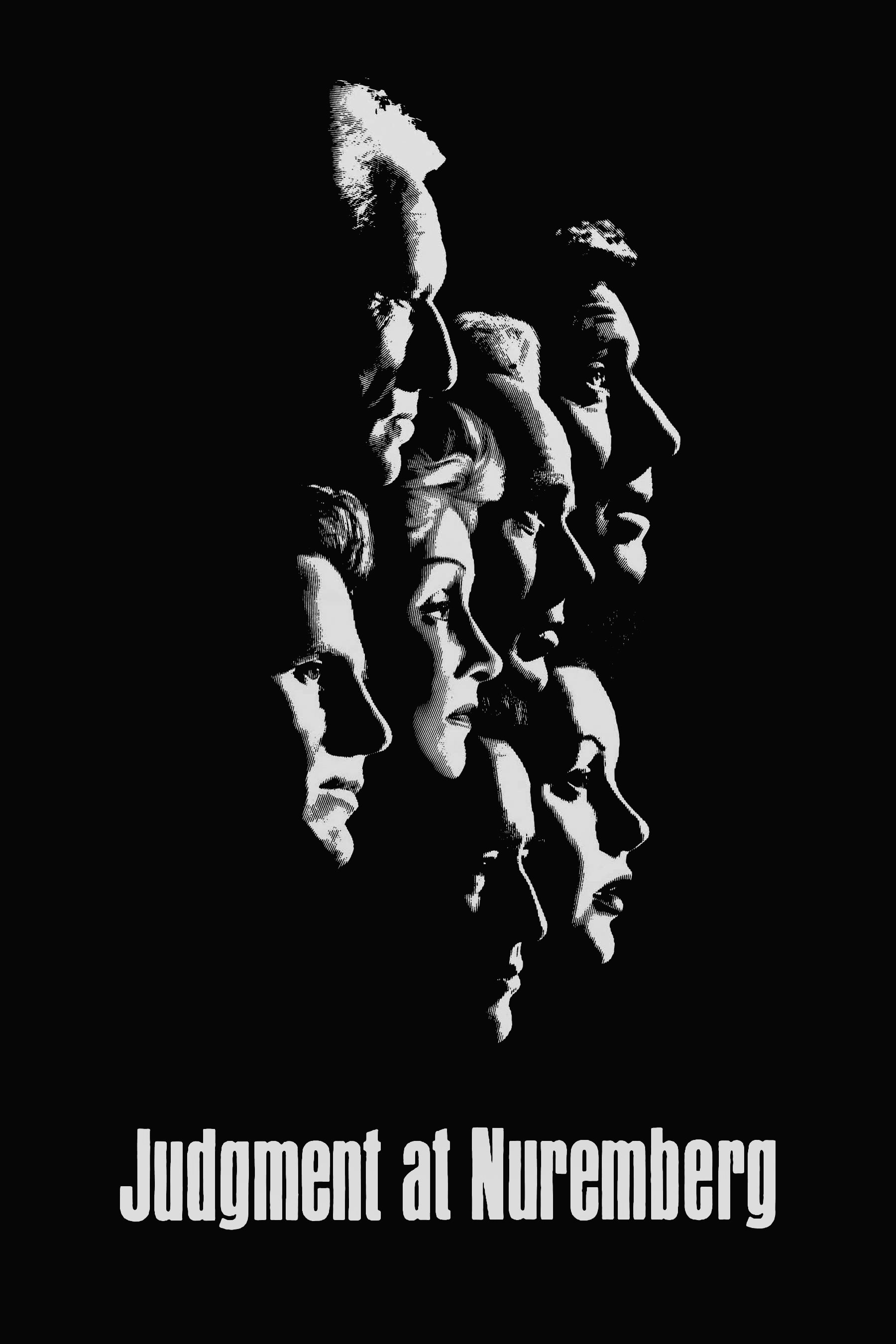
For some reason I’ve been thinking a lot about Nuremberg lately. And it has nothing to do with the film last fall of the same name, though that of course too came to mind watching Stanley Kramer’s seminal courtroom drama about Holocaust accountability, Judgment at Nuremberg. The lessons that the world took away from that episode of history and indeed the themes relayed in this film feel only too relevant in this moment of history that with any luck will end on its own repeat of Nuremberg levels of accountability.
That being said, Kramer’s film is a bit of an odd beast where the subject of Nuremberg is concerned. It is not in fact a biographical retelling of the Judges’ Trial of 1947 -the context of the war, the Holocaust, and the Nazis all remain in place, but the figures themselves are fictionalized and even a Nazi legal episode is renamed and only loosely follows the facts. This isn’t because the movie endeavours to mislead anybody but because it is a story more interested in the themes of Nuremberg than the history of it; using the pretense and context of the trials for a debate on the notion of collective guilt, that the German people -and certainly German institutions that may not have been officially arms of the Nazi Party- still bore some responsibility for the horrors enacted by the regime. Abby Mann, who wrote what was initially a television play for the series Playhouse 90 and then adapted it for this feature film version, grapples very intelligently with that idea. And it of course resonated very strongly with Kramer, the predominant social issues filmmaker of the time. Both come down on the side of that debate broadly accepted by history, but they take the nuances and logic of the debate refreshingly seriously.
The central figure of the film is Judge Dan Haywood, played by Spencer Tracy at the top of an unusually star-studded cast. He has arrived in Nuremberg in 1947 to head up the three-judge panel trying the cases for six German judges and prosecutors complicit in enforcing Nazi policy and crimes against humanity. It is a tense situation geopolitically -as some believe the defendants should get off easy as an olive branch to the German people in the view that Germany would be a useful ally against the Soviet Union's increasing sphere of influence. The notion also being that these were not high-ranking members of the Nazi Party and could claim a degree of ignorance over the scope of the Holocaust. This is the argument taken by a local woman Frau Bertholt, played by Marlene Dietrich -the widow of a German general with whom Haywood strikes up a cordial relationship- and also the chief defense counsel Hans Rolfe (Maximilian Schell -who won an Oscar for his performance). On the opposite side of the argument is the prosecutor Colonel Lawson (Richard Widmark), arguing for collective accountability -though brashly and not always in good faith.
In its best moments the film very much is about its debate, and the three perspectives epitomized by Rolfe, Lawson, and Haywood -the neutral party until he is forced to pass judgment. And the film doesn't treat their arguments lightly, Kramer probably understanding his audience may hold views contrary to the consensus and trying to make the argument strongly for that consensus while not dismissing outright the logic behind an opposing view.
Logic is the chief baton of Rolfe, who places all blame for the genocide at the feet of Hitler and his inner circle, and while "following orders" isn't specifically evoked, it is the gist of his position, which he lays out with some fairly apt rationales and analogies. The respectability of the defendants, and especially a veteran judge Ernst Janning (Burt Lancaster) from before the war, and even the rise of Nazism is brought up, the very believable notion that such crimes of justice that they presided over would have been carried out without them; most notably Rolfe makes a point to call out the hypocrisy of the tribunal, for not holding to account the Vatican for the Reichskonkordat, Stalin for the Nazi-Soviet Pact, and the American origins of some of the tenets of Nazi ideology (privately to Janning he also brings up the atomic bombings of Hiroshima and Nagasaki, perhaps the most damning counterweight against the Americans in his arsenal that it would have been nice to see utilized in court). He is a convincing, charismatic lawyer, which the film does provide reason to be sceptical of, his rhetorical tactics and gestures being elaborate in the manner highly associated with the Nazis. It is a shrewd bit of acting from Schell, one of the only actors carried over from the original television production, giving indeed an excellent performance that does feel worthy of his Academy Award (although it is a Supporting not a Lead role). Crucially, he plays Rolfe with conviction -in a scene outside the court with Haywood he is much more personable than his prosecuting counterpart- and threads the needle well of defending Nazis from a strictly logical vantage point without casting aspersions that he supports the ideology himself.
It is a complexity for audience sympathies, especially with Lawson being so ill-motivated, aggressive, and as we ultimately learn emotionally driven despite being on the right side of history. He rubs Haywood the wrong way during a dinner scene outside of court and does seem to have a desire to punish Germans collectively more out of American power than moral righteousness. And of course, he springs concentration camp footage on the proceedings to cynically provoke the emotions of the judges, observers, and witnesses.
As in the more recent movie Nuremberg, the film does indeed proceed to show the real footage from the liberation of several camps and the reactions of the various actors to its horrors. And it is a shocking thing to see in such a mainstream Hollywood movie for the time -perhaps the first time- but it is potent and sobering. Kramer has no interest in playing things safe when it comes to this subject matter, demonstrating so in the use of this footage, but also the principal topics brought up with witnesses on the stand, primarily notions of "blood defilement" in the litigation of a case of a Jewish man romancing a young non-Jewish girl -a stand-in for the Katzenberger Trial- and forced sterilization. Both themes are addressed again with a bluntness very unusual for the time -Kramer and the Hollywood industry understanding it seems the necessity to avoid censorship over this calibre of material.
The performances also bring it home. Montgomery Clift plays Rudolph Petersen, the Jewish business owner recounting the circumstances of his sterilization at the discretion of the Nazi-abiding courts. Shifty and fearful as he stumbles through his account, and viscerally ashamed, it is perhaps Clift's greatest, most moving performance for its relatively minimal screen-time. And the same is almost true of his successor, Judy Garland playing Irene Hoffmann -formerly the subject of that alleged affair in what this film renames the Feldenstein Case when she was a girl. It is Garland's last great performance as, initially afraid, she eventually testifies to the unfair kangaroo court proceeding that resulted in the death of an older man to whom she was a friend, not a lover (given the criminal age gap between the two, the inference of Nazis casting Jews as pedophilic predators is not insignificant). She lashes out powerfully at the leading and very disturbing questions Rolfe poses in one of the more overt emotional displays of the movie, but one that works.
Both testimonies do factor into the arguments at hand when it comes to the defendants, and while one -played by Werner Klemperer- is stoic and unyielding in the perceived unfairness of the tribunal, Lancaster's Janning (who speaks little for more than two hours) is gradually quite moved. To the degree that when he is put on the stand he unexpectedly admits full guilt for the Feldenstein Case and other miscarriages of justice that he perpetuated; but more broadly he goes the length of denigrating the entire German people for buying into and going along with the Nazi regime due to that sense of patriotism that Hitler stoked and the promise of the nation recapturing its former glory. Essentially, it is the thesis spelt out and in spite of Lancaster’s sombre performance it is the beat of the film that feels the most dramatically artificial. It’s a good lead-in for Rolfe’s last argumentative ploy -the denigration of the allies’ various human rights crimes, which needed to be stated. But it is also too clean a way of attempted redemption. Janning still suffers the consequence of a prison sentence, but he is made into a nice remorseful figure by the movie in spite of his actions. Kramer doesn’t go too far thankfully though; the last exchange of the movie between Janning and Haywood is rightly biting, but there is a sense of him getting off by the movie’s morals a bit too easy.
Haywood’s judgment is the decisive point, a long speech supposedly delivered by Tracy in a single take, which lays out the foundation for the findings of both the real Nuremberg Trials and Kramer and Mann by virtue of their own litigation through this dramatization. And the narrative reaches the conclusion organically, the accounts and feelings of Frau -who subsequently ceases contact with Haywood- and the arguments of Rolfe hold some water, but the picture painted by Petersen, Hoffmann, and Janning is very vivid on the accountability of institutions and a social order writ large that was fundamentally wrong, much as there may have been people within it quietly opposed to the state of things. And silence is complicity. The sentences do feel justified by the end, and much as Haywood’s moralizing comes from a very American place of authoritative judgment without introspection, his final words to Rolfe ring quite true. As logically sound as his defences were, what’s wrong is wrong.
Judgment at Nuremberg came out conveniently around the same time as the Adolf Eichmann trial in Israel, with which there was a great deal of interest -given his role as one of the last major architects of the Holocaust to be held accountable. The footage that Lawson shows here also played a role in that tribunal, and there was an appetite, now more than fifteen years since the end of the war to see justice for those crimes. The movie received a lot of attention off of its star ensemble -which notably included also the first major film role of one William Shatner as Haywood’s assistant. But one cannot blame all of these figures from wanting to be part of it -each role is written so well it gives actors with even comparatively smaller parts a lot to chew on. That alone still makes it compelling all these years later. But so too do its values. It is not a perfect Nuremberg movie -the fact that it is fictionalized would negate that in any case- but it does engage well with its argument, presenting the thesis of the tribunal in an effective and convincing manner. One of the strongest, most potent legal dramas.
Support me on Patreon: https://www.patreon.com/JordanBosch
Follow me on Bluesky: https://bsky.app/profile/jordanbosch.bsky.social
Letterboxd: https://letterboxd.com/jbosch
Twitter: https://twitter.com/Jordan_D_Bosch
Comments
Post a Comment