
The Criterion Channel Presents: The Lure (2015)


What happens when you combine a classic fairy tale with its own grim underpinnings and the wild and raucous style of a rock musical? Well you might get something that looks an awful lot like a rip-off of Agnieszka SmoczyÅ„ska’s The Lure, a 2015 dark reinterpretation of The Little Mermaid. The Polish horror-musical is about two mermaids, Golden (Michalina OlszaÅ„ska) and Silver (Marta Mazurek) who become strippers at a nightclub in a coastal community, but are soon discovered. However rather than being rejected and persecuted by the humans, they are instead given the chance to form their own musical act, The Lure. While Silver falls in love with a human Mietek (Jakub Gierszal) despite the dangers of doing so, Golden begins feasting on random townsfolk. 
This is an eclectic and truly one-of-a-kind movie that’s unabashed weirdness is only equalled by its meaningful purpose. It’s quite a feminist take on the mermaid idea, from restoring the creatures’ mythological bloodlust and siren song, to de-sexualizing them, making a point of emphasizing their lack of human genitalia (and presence of aquatic sex organs instead) while still retaining the performance of eroticism. And though there’s no immediate hatred or mob rally against the mermaids, they aren’t accepted in society, very much othered by the people they come into contact with. But conforming to humanity is coded as deeply unnatural. As in The Little Mermaid, Silver tries to change her biology for her love, but to much more brutal and disastrous result. The visual effects and imagery of this transformation are vivid and horrifying, taking an already problematic message and exposing it for just how twisted it is. And yet the movie manages to pair this
darkness with some really vibrant and colourful musical numbers. I can’t speak for the songwriting of course, but the performers are good singers, the music is decent, and the staging where applicable is thoroughly energized and well-choreographed. And despite how disparate they may seem from the subject matter otherwise, they never distract or detract from the reality of the rest of the film. The Lure doesn’t need the campiness or comic element of other horror musicals like The Rocky Horror Picture Show or Little Shop of Horrors, it feels completely organic as is. With the spellbinding allure of the kind of fairy tale it’s inverting and the stylish direction and pace of a rock opera, with diversions into quite effective body horror and urban fantasy, The Lure is a bizarre, magnetic film of a kind all its own.


Criterion Recommendation: City of God (2002)
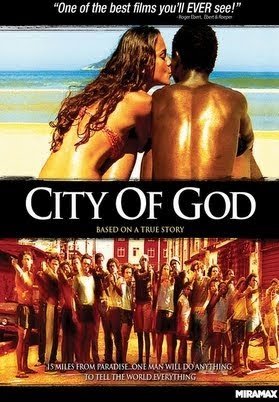
       Easily one of the most fascinating, intricate, and revelatory movies of the early 2000s, this story of Brazilian slum gangs based loosely on real events is one of the most strikingly intense crime films to come out of world cinema. Few movies better immerse you in an environment, and few movies better create a sense of claustrophobia in the chaos of that environment. A lot of that is owing to Fernando Meirelles’ superb direction, the exquisite cinematography and shot composition, and sharp, disorienting editing that gives the movie a near constant sense of urgency as it shifts focus between its multiple points of view. Powerful and unrelenting, City of God is more than just a political statement on gang warfare in Rio de Janiero’s disenfranchised communities, it’s a radical and bold exposé of the kind of underworld we’d rather not think about.

Comments

Popular posts from this blog

The Strange History of the American Spoof Movie

Parody movies have been around for a lot longer than we tend to think of them. Even from the earliest days of Hollywood there were movies meant to satirize a particular subject or genre. In the silent era, Buster Keaton was responsible for a few. And in the early sound era, almost as soon as the monster pictures took off did you see comic versions of them -Abbott and Costello hosting a few. But parody movies tended to be subtle for most of cinema history, or parody came in conjunction with another goal of the comedy. It really wasn’t until the 1980s and 90s that it took off and became popularly understood. And there is perhaps a line to be drawn to the counterculture comedy explosion that began in the 1970s through avenues like  Saturday Night Live , which frequently parodied from even its earliest years popular movies and cultural properties of the time. But that is still a way’s back. To my generation though, ‘parody movie’ is perhaps a less known term than the more blunt ‘s...

Notes on the Title Cards of The Lord of the Rings

It might be sacrilege for one who both considers The Lord of the Rings  trilogy to be one of the greatest triumphs of cinema and has been an avid lover of the films since adolescence, to declare that the original theatrical cuts of the films are better than the much beloved extended editions. Easily it’s my most controversial opinion regarding these movies. Don’t get me wrong, I do like the extended editions quite a lot, especially as someone who just enjoys spending time in that universe. They flesh it out more, add extra flavour, and in increasing the length by about an hour really emphasize the epic quality of these films. But I find that the original cuts are generally more cleanly paced, more seamlessly edited, and much more accessible to audiences. All the stuff there is to love about The Lord of the Rings  is there in the original versions, the plethora of new and extended scenes merely add to that for fans. And of those, they fall into three camps for me: 1....

Back to the Feature: New York, New York (1977)

New York, New York  is a two hour forty minute musical movie largely about a toxic relationship and I understand why it was Martin Scorsese’s first big flop. Some have blamed its poor reception on the kind of movie it was, of a style and tone Scorsese wasn’t known for, but I find that hard to believe. Even after only five films, he’d proven himself an extremely versatile director, and Alice Doesn’t Live Here Anymore  found an audience. Sure this jazz musical love letter to New York City was following up Taxi Driver and its’ far more cynical take on the city, but then it’s also ‘from the director of Taxi Driver ’ which itself was a big hit. Was it a matter of public appetite for musicals, or mere word of mouth and early critical reception that dissuaded viewers? Irrespective of that, I was stunned to discover this movie was the origin of the titular song, which I’d assumed was much older (it’s definitely got the sound of something that might have come out of the Jazz sce...